OPERA AS A CEREMONY & HEALING PROCESS
Returning to the Healing Roots of Art
The Call of the Asklepieia
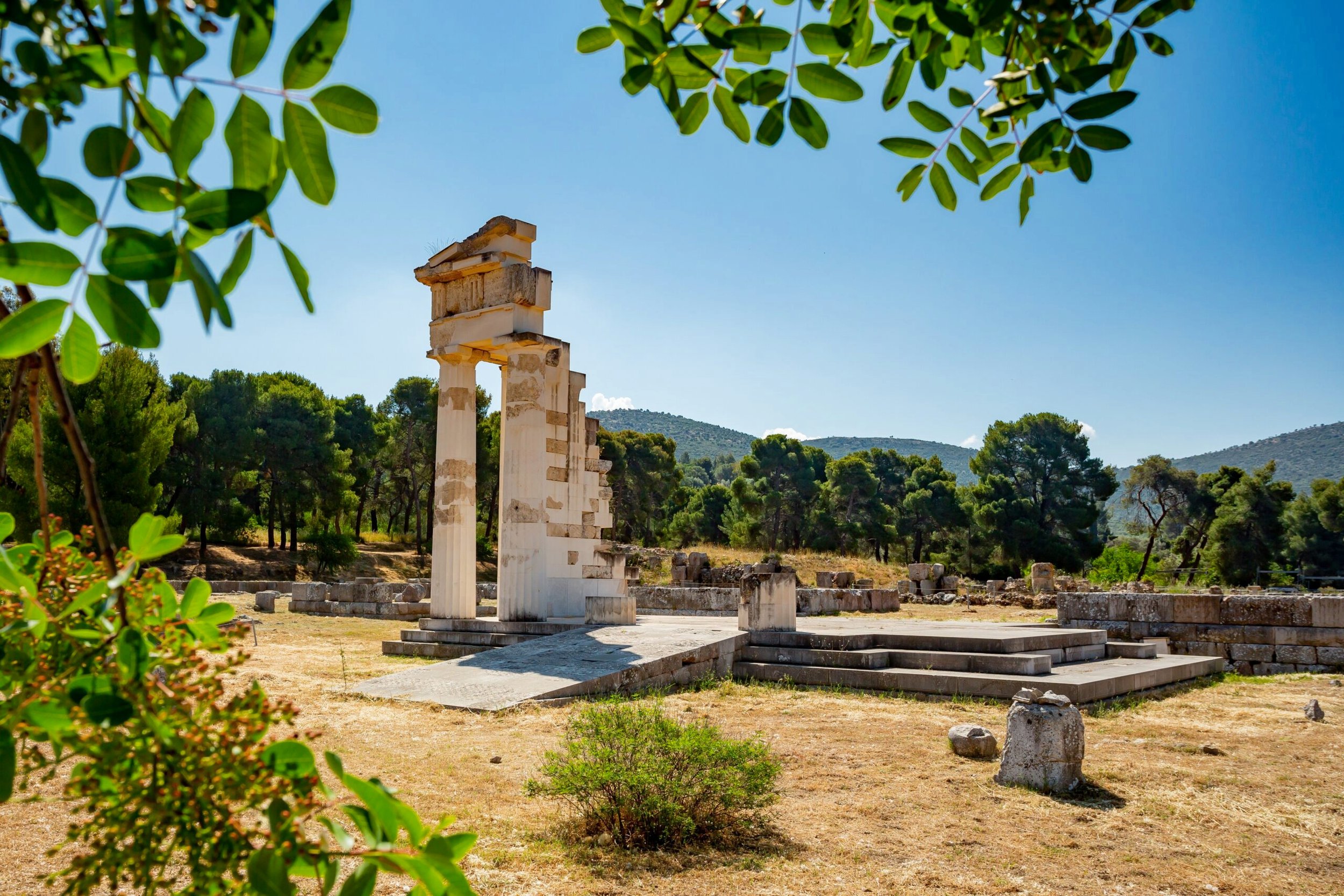
This path began in 2020, during a visit to the Sanctuary of Asklepios at Epidaurus.
Standing within that ancient landscape, I felt a call—not to recreate the past, but to remember and gradually reactivate something of the healing consciousness embodied by the Asklepieia.
The Asklepieia were among the most important healing sanctuaries of ancient Greece. Health was not approached through the body alone, but through the whole human being. Purification with water, movement, nourishment, rest, prayer, ritual, dreams and the arts belonged to an interconnected process of care.
At Epidaurus, healing existed alongside music, sacred ceremony and theatre. Art was not merely entertainment. It could create the conditions for catharsis, reflection and transformation.
This understanding awakened something that had long existed within my own journey as an opera singer.
Opera unites voice, music, theatre, poetry, movement and visual art. It also carries within it the memory of ancient tragedy. I began to imagine it not only as performance, but as but as a contemporary ritual space—a place where the arts could meet practices of care and serve the human being as a whole: body, heart, mind, soul and spirit.
The Pandemic as a Wake-Up Call
The pandemic became a profound threshold, both personally and collectively. It interrupted the speed of ordinary life and confronted humanity with fear, isolation, grief and uncertainty.
At the same time, it opened an unexpected space for introspection.
We were invited to look within, encounter what had remained unheard and reconsider the ways in which we relate to our health, one another and the Earth. The experience revealed the need for a more conscious and holistic understanding of wellbeing—one that includes our emotional, relational, spiritual and collective life.
As I explored in my article Inner Peace after the Pandemic, the external crises of humanity cannot be separated entirely from our inner state. When greater awareness and balance are cultivated within the individual, they can also influence the way we meet the collective world.
From Remembrance to Performance
From this inquiry, two performances emerged.
Judith became a call to remembrance and awakening. It invited the spectator to look within, question and open their own “Pandora’s box”—encountering what was asking to be seen.
Alma continued this path through the journey of the soul—its memory, wounds, transformations and longing to return home.
Through both works, I explored how opera could move beyond representation and become a living process. Voice, music, movement, symbolism and holistic practices came together, allowing performance to become reflection, ritual and an invitation towards healing.
I was searching for a contemporary echo of the Asklepieion—a space where the arts could once again unite in service of the human soul.
From “Listen to Me” to “I Am Listening”
After the performances, audience members began asking whether it was possible to work with me more personally.
Their questions revealed the next step of the path.
I began to descend from the stage.
I moved from:
“Listen to me”
towards:
“I am listening.”
I became increasingly interested in meeting the person before me—listening to the voice beneath the voice and discovering the inner world that wished to be expressed, regulated, remembered or released.
The artist did not disappear. Her tools changed direction.
The voice was no longer only something to present. It became a way of listening, connecting and returning home.
The Path Today
Alongside this transition, we created Enosis, a therapeutic sound ensemble founded upon the meeting of voice, instruments, vibration and collective presence.
Today, my work is increasingly devoted to the therapeutic path through voice, sound, breath, deep listening, nervous-system regulation, meditation, embodied awareness and ritual.
These practices are not an attempt to reproduce the ancient Asklepieia literally. They are part of a living inquiry inspired by their wisdom:
How might we once again approach wellbeing as a relationship between body, heart, mind, soul, spirit, community and nature?
My intention is to allow something of this ancient field to be remembered—slowly, responsibly and through forms that can speak to contemporary human life.
Opera as a Ceremony & Healing Process is therefore more than a performance or artistic project. It is my own path of return: to the deeper purpose of the voice, to the healing roots of art and to an understanding of creativity as an act of connection and care.
A movement from the stage to the human being.
From performance to presence.
From “Listen to me” to “I am listening.”
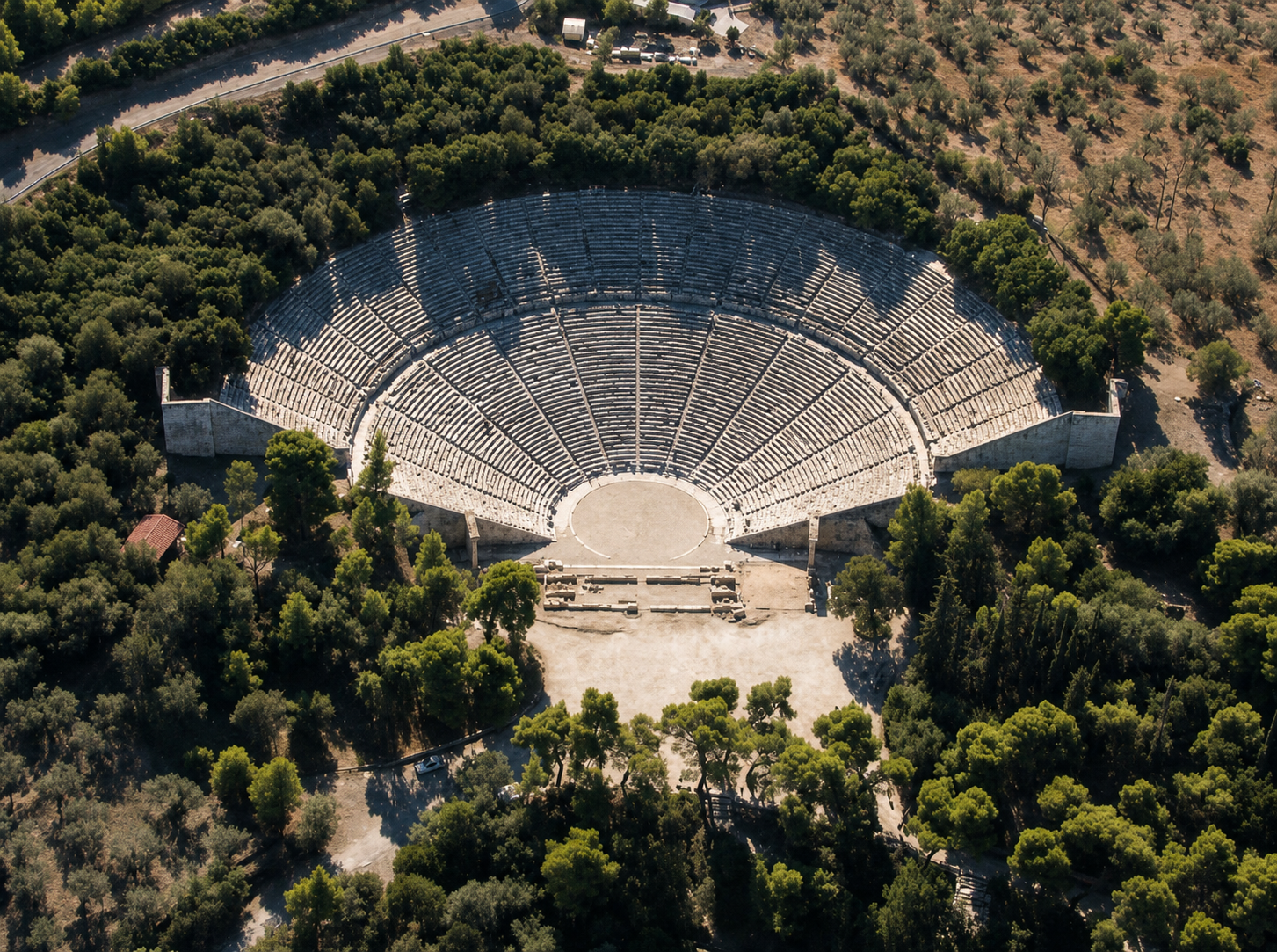
The ancient Greek theatre of Epidaurus
Epi-dauros, as a word in greek, signifies “acting upon the aura’’.
Seen from above, the theatre resembles a radiant sun, with its seating divisions extending like rays from the circular orchestra at its centre. From the Greek theaomai — “to behold” — theatre becomes an act of conscious witnessing: a process of emotional catharsis and inner transformation through which the spectator receives the sacred within and reconnects with the divine essence of the soul.
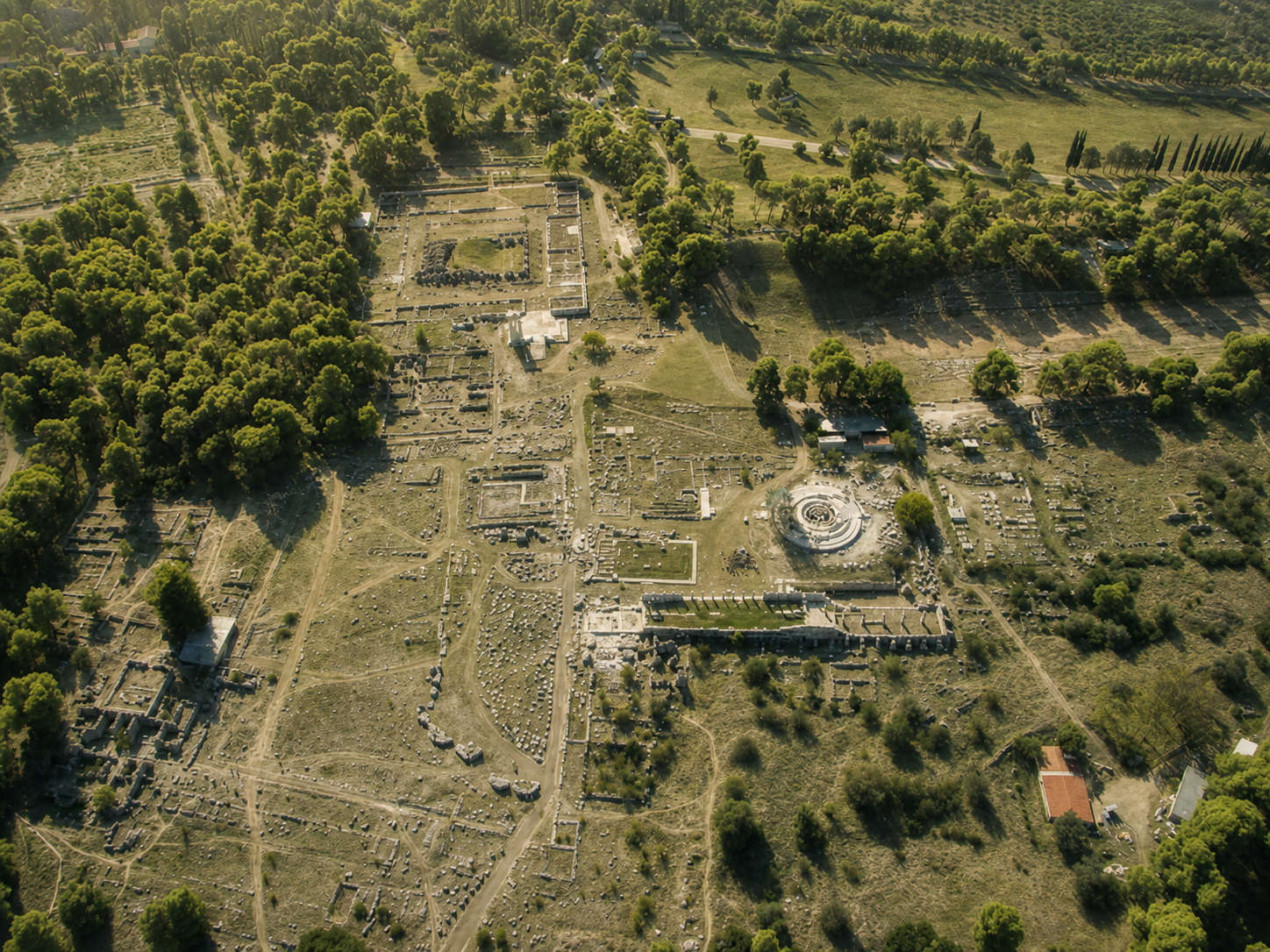
The Asclepius Healing center of Epidaurus, the greatest healing center of Ancient Greek and Roman world
brought together the Stadium and athletic facilities for the cultivation of the body; the ceremonial Banqueting Hall, baths, sacred springs and an advanced water system for nourishment, cleansing and preparation; the Odeion and Theatre, where music and drama supported harmony and emotional catharsis; the temples of Asklepios, Artemis and Apollo Maleatas, together with the Tholos, for worship, offerings and ritual; and the Enkoimeterion and Abaton, where patients entered sacred healing sleep and sought guidance through their dreams.
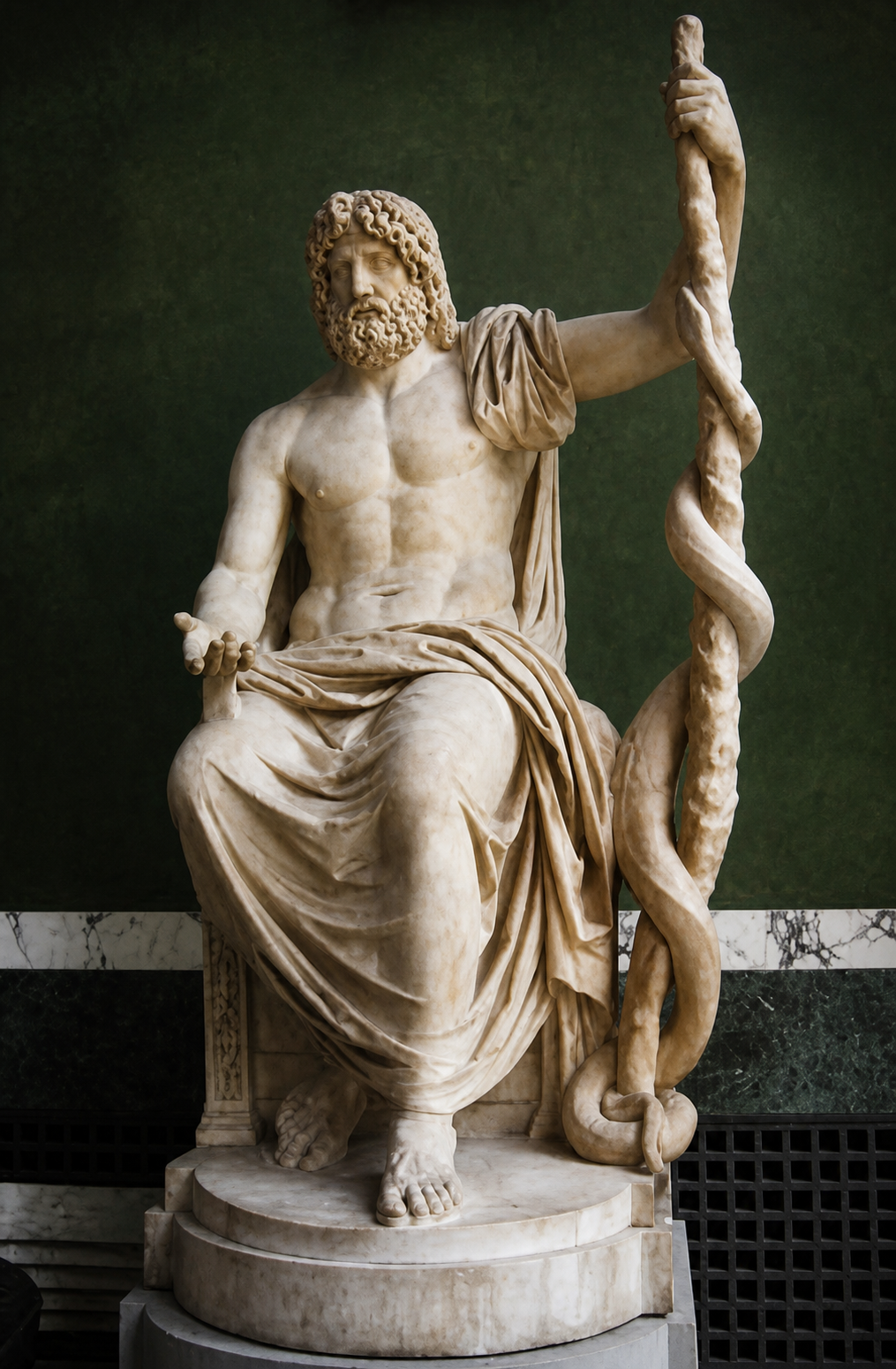
Asklepios, son of Apollo and Coronis, was entrusted to Chiron and initiated into the art of healing. In the symbolic tradition that inspires this path, Asklepios was brought close to death and was told by Chiron: “Find the medicine of your own salvation.” His journey reminds us that the path of the healer begins within. We all carry an innate wisdom that seeks balance and restoration; sometimes we simply need the presence of another to help us remember and awaken our own inner self healing wisdom.
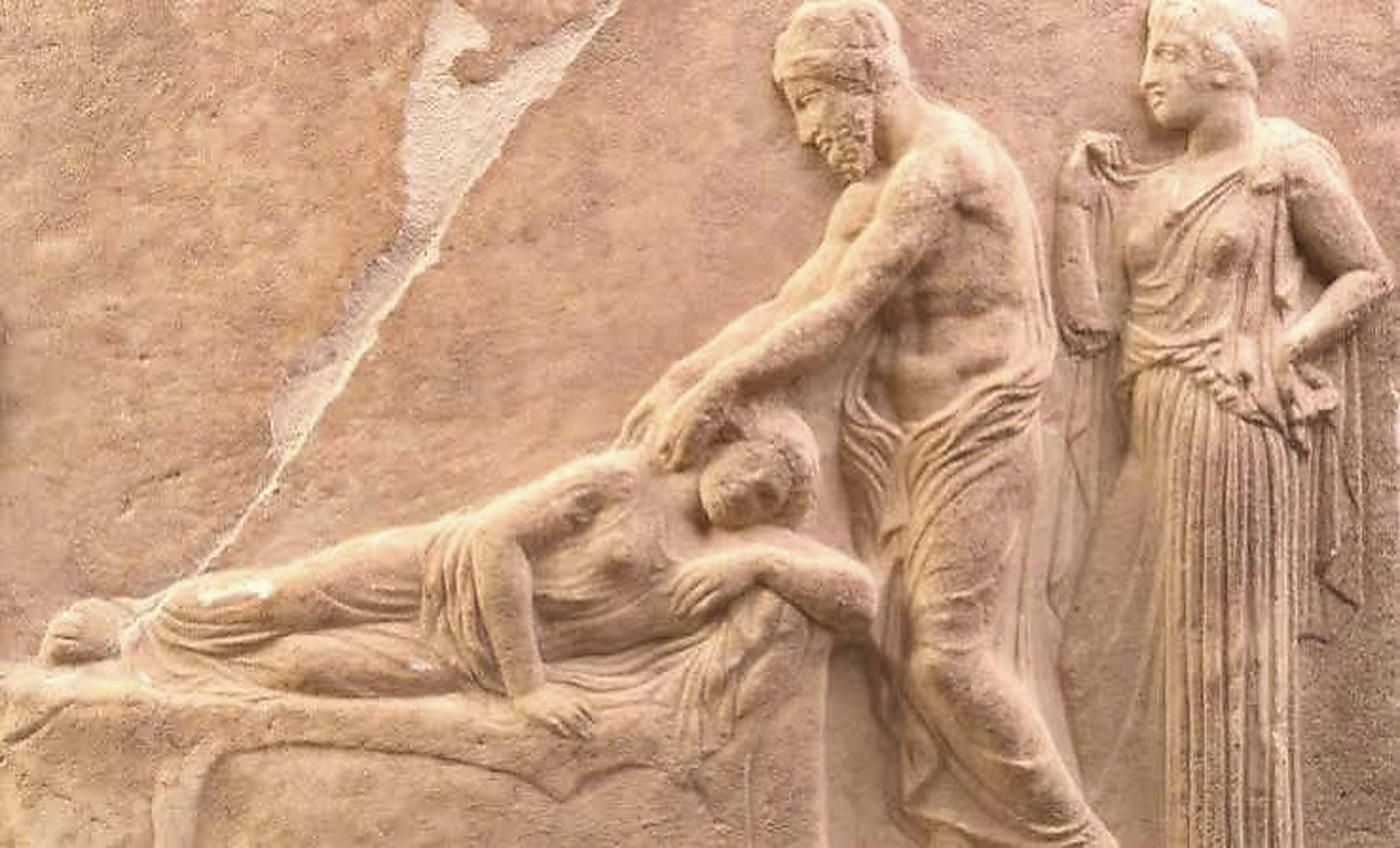
At the heart of the Asklepieian healing process was enkoimesis — sacred healing sleep. Following purification, prayer and preparation, patients entered the Abaton, where Asklepios was believed to appear through dreams and reveal guidance for their healing. Τhe practice may be an ancient parallel to therapeutic work as hypnotherapy and the subconscious mind.
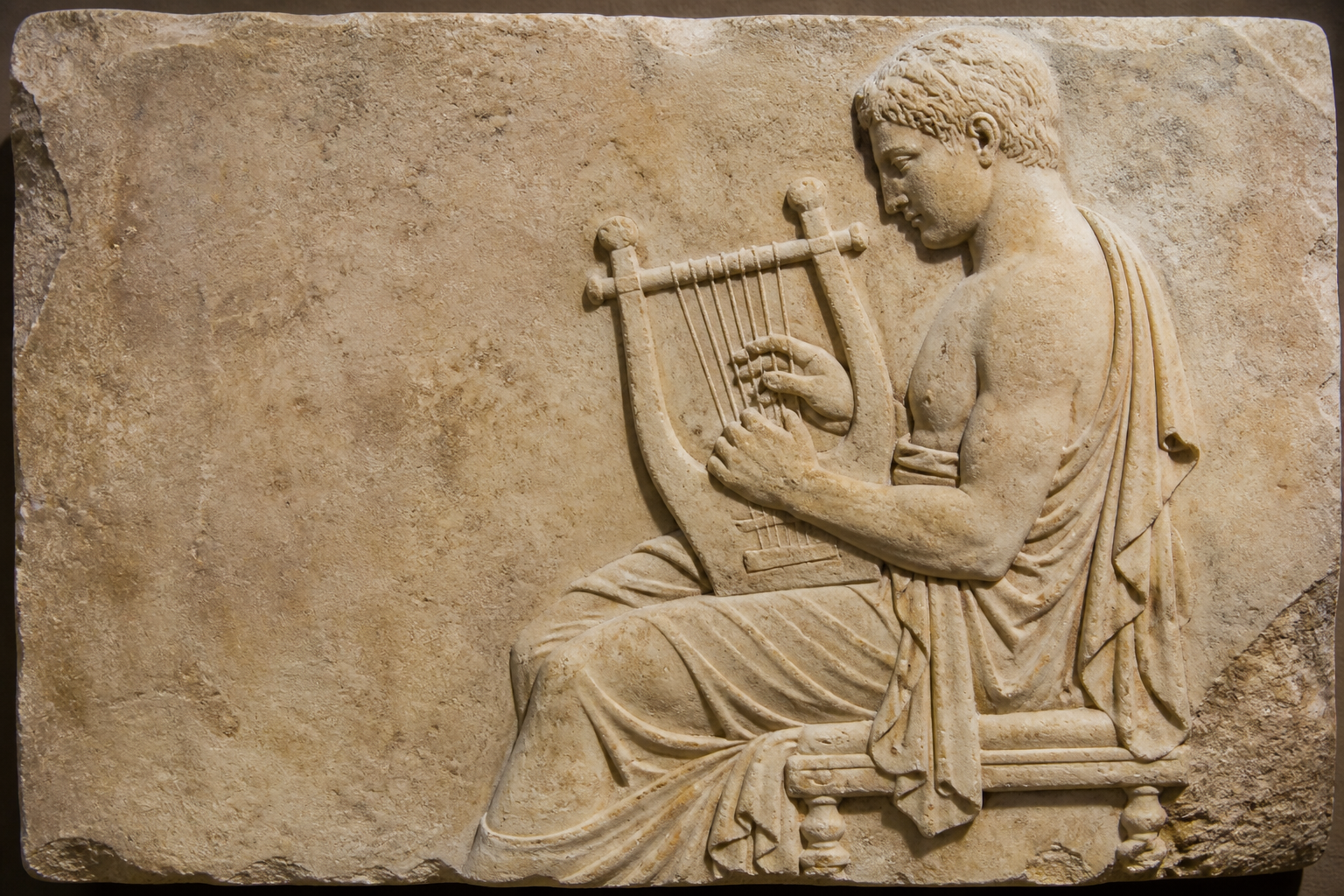
The ancient sound healing
The Pythagorean tradition recognised sound and music as forces capable of influencing the inner state of the human being. Through the mathematical relationships of rhythm, interval and harmony, music was used to calm the passions and restore harmony to the soul. The kitharode listened for inner disharmony and responded with carefully chosen modes and melodies, guiding dissonance towards balance — an ancient understanding that continues to resonate within contemporary sound therapy.